

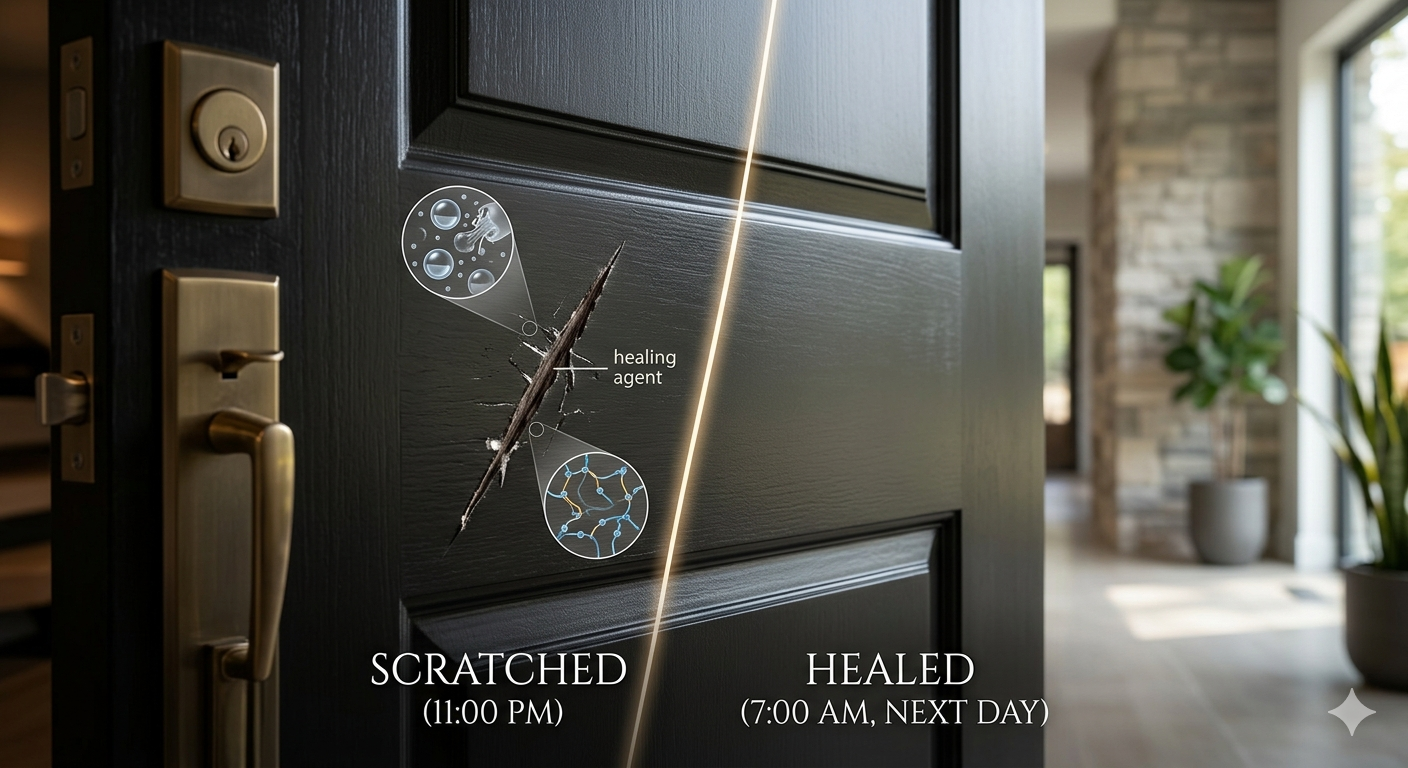
A common frustration for homeowners is the inevitable deterioration of front doors. Sun, rain, and the bumps and scrapes of daily life can leave behind unappealing scratches and peeling paint. Traditional solutions involve tedious sanding, priming, and painting, a time-consuming process that often leaves visible patchiness. But a new frontier in materials science offers a revolutionary solution: self-healing polymers that can “heal” scratches in your front door overnight.
This innovative technology utilizes polymers, large molecules made of repeating subunits, designed with intrinsic capabilities to repair damage on their own. The secret lies in incorporating functional groups or microcapsules within the polymer matrix that respond to external stimuli like scratches or cuts. Let’s delve into how this fascinating technology works.
How it Works: The Mechanism Behind “Self-Healing”
The healing process can be triggered by various factors, but in the context of residential doors, the focus often falls on mechanisms activated by atmospheric conditions or minimal human intervention. Here are two prominent types of self-healing mechanisms:
1. Capsular-Based Healing: Imagine tiny, microscopic bubbles (capsules) filled with a healing agent – often another type of monomer or a liquid that can polymerize – dispersed throughout the coating of your door. When a scratch occurs, it ruptures these microcapsules, releasing the healing agent into the damaged area. As the agent interacts with other components or initiates polymerization, it fills the scratch and effectively heals it. This is similar to how your body repairs a cut – the initial damage releases clotting factors that initiate the healing process.
2. Intrinsic-Based Healing: This type of self-healing is built directly into the polymer’s molecular structure. The polymer chains possess dynamic covalent bonds, which can reversibly break and reform. When a scratch occurs, the local stress concentrations can trigger the breaking of these dynamic bonds at the damaged site. However, the presence of these same groups elsewhere in the material can then reform the bonds across the damaged interface, essentially re-bonding the two severed sides and healing the scratch. This approach is often considered more repeatable than capsular-based healing as the healing mechanism is inherent to the material itself and doesn’t rely on finite healing agents.
Bullet Points for Benefits:
- Enhanced Durability and Lifespan: Self-healing polymers significantly extend the life of your front door by minimizing the long-term impact of minor surface damage. By preventing scratches from escalating into larger peeling issues, the structural integrity and aesthetic appeal of the door are preserved for years longer than traditional finishes.
- Significant Maintenance Savings: The biggest financial advantage of self-healing polymers is the drastic reduction in maintenance costs. You can eliminate the need for frequent sanding and repainting associated with minor scratches. This saves not only money on materials and labor but also valuable time and effort.
- Aesthetic Preservation: Self-healing polymers effectively maintain the original look of your door, preventing the unsightliness of scratches and peeling paint. This ensures your home maintains its curb appeal and leaves a positive impression on visitors.
- Increased Efficiency: The time-saving aspect is substantial. No longer will you have to schedule weekends for tedious door refinishing projects. Minor scratches essentially disappear on their own, leaving you free for other tasks or leisure activities.
- Sustainability: By reducing the need for constant refinishing and ultimately prolonging the replacement cycle of your door, self-healing polymers offer environmental benefits. This aligns with modern sustainability efforts by minimizing waste and resource consumption associated with material replacement and refinishing processes.
In conclusion, self-healing polymers are poised to revolutionize the way we care for our homes, starting with something as basic yet essential as our front doors. This technology offers a glimpse into a future where maintenance is minimized, and the materials around us are actively engaged in preserving their own appearance and function. The end of peeling and the beginning of effortless preservation may be closer than you think, offering not just a durable and beautiful solution, but a sustainable and convenient alternative to traditional maintenance.
Leave a Reply