

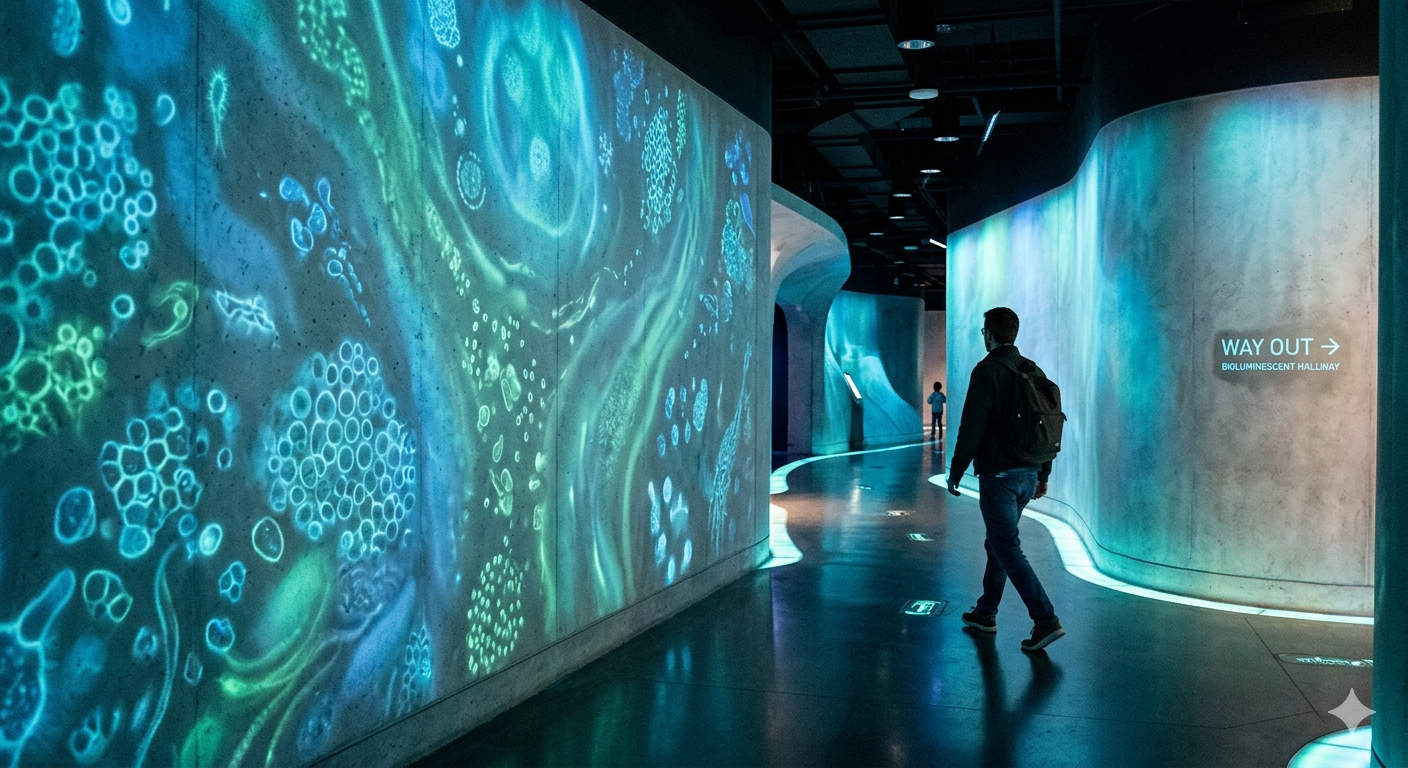
Imagine a hallway bathed not in the harsh, artificial glare of traditional light bulbs, but in a soft, natural glow emanating directly from the walls. A glow that pulses gently, shifting in hue like a shimmering underwater landscape. This might sound like a scene from a science fiction novel, but it’s the very real future being pioneered by scientists and designers exploring the potential of bioluminescent pigments as an alternative for interior lighting.
Could our hallways, and indeed our entire buildings, one day be illuminated by a coat of living, glowing paint? Let’s delve into this fascinating possibility and explore the potential, challenges, and ultimate viability of this green lighting solution.
The Magic of Nature’s Internal Light
Bioluminescence is a widespread and captivating phenomenon in nature. From deep-sea creatures and fireflies to fungi and some species of insects, hundreds of thousands of organisms possess the incredible ability to produce light through biochemical reactions.
The mechanism behind this natural light is deceptively simple: it usually involves a protein called luciferin and an enzyme called luciferase. When these two substances react in the presence of oxygen, and often an energy source like ATP (adenosine triphosphate), they release energy in the form of light.
Wait, Living Paint? Let’s Break Down the Concept
The idea of “bioluminescent paint” isn’t exactly about painting with living, breathing glowing paint, although that would be an incredibly striking (and likely challenging) concept. Instead, researchers are focusing on several key approaches:
- Encapsulating Living Microorganisms: This approach involves trapping genetically engineered bioluminescent microorganisms, like specific strains of bacteria or algae, within a transparent, breathable substrate that can be applied like paint or a coating. The challenge lies in creating a viable environment within this coating – providing nutrients, water, and waste removal – to keep the microorganisms alive and glowing.
- Incorporating Stable, Purified Bioluminescent Proteins: This method focuses on extracting and stabilizing the key components – luciferin and luciferase – or their synthetic counterparts, and then incorporating them into a polymer-based paint formula. The goal is to create a coat that can emit light without requiring the maintenance of a whole living ecosystem.
- Engineering Plant or Fungal Systems: Another promising avenue is genetically modifying plants or fungi to be inherently bioluminescent and then cultivating them as vertical gardens or living walls along hallways, where they would serve as both an aesthetic element and a source of natural light.
A Guiding Light for a Greener Tomorrow
The potential benefits of bioluminescent hallway lighting are numerous and compelling, aligning perfectly with our global push toward more sustainable and eco-friendly technologies:
- Drastic Energy Savings: The most obvious advantage is the potential to dramatically reduce, or perhaps even eliminate, the electricity needed for hallway lighting. While this type of light wouldn’t replace high-intensity lighting in all situations, it could handle essential tasks like guidance and ambiance, significantly lowering a building’s energy footprint.
- Unparalleled Sustainability and Reduced Carbon Footprint: By replacing traditional light bulbs and fixtures with natural or engineered systems, we’d significantly reduce the demand for raw materials (glass, metal, rare earth elements) and the energy-intensive manufacturing processes associated with lighting. Furthermore, the light production itself releases no greenhouse gases.
- A Natural and Biophilic Approach to Design: This method seamlessly integrates nature into our built environment, fostering a sense of biophilia – our innate connection to nature – which has been linked to improved well-being, reduced stress, and increased cognitive function.
- Enhanced Safety and Unique Lighting Solutions: Bioluminescent pigments can be used to create illuminated pathways on floors, stairs, and emergency exits, enhancing safety in ways that traditional lighting might struggle to match. They can also provide unique lighting solutions in areas where electricity is difficult or expensive to install.
- Reduced Light Pollution: The light produced by bioluminescence is generally softer and less harsh than artificial light, making it a more environmentally friendly option that can minimize the disruption of natural ecosystems and improve stargazing opportunities.
Charting the Unknown: Challenges and Considerations
Despite its significant promise, integrating bioluminescent pigments into our everyday lighting infrastructure is not without its substantial challenges:
- Maintaining Light Intensity and Longevity: Currently, most bioluminescent systems produce relatively low-intensity light compared to traditional bulbs. Engineering stable and powerful bioluminescent systems that can provide adequate and consistent illumination over long periods is a major engineering hurdle.
- Cost of Synthesis and Scaling Up: While the concept holds the promise of long-term savings, the initial research, development, and production of stable bioluminescent pigments – especially genetically engineered proteins or systems – are currently expensive. Achieving cost-parity with traditional lighting is a key goal.
- Regulatory Hurdles and Ethical Considerations: Using genetically modified organisms (GMOs) or their products in construction materials raises significant regulatory and ethical questions. Comprehensive safety assessments, environmental impact studies, and clear guidelines will be crucial for public acceptance and widespread adoption.
- Stability and Environmental Factors: Creating a coating that is durable and resistant to degradation from environmental factors like temperature, humidity, and UV radiation, while still supporting the necessary biochemical reactions, is a significant material science challenge.
- Maintenance and End-of-Life Concerns: Living or complex protein-based systems would likely require some form of maintenance. Furthermore, the disposal or recycling of these potentially complex biocomposites at the end of their lifespan would need to be carefully considered.
Conclusion: Shining a Light on the Path Forward
So, is the future of hallway lighting a coat of living, glowing paint? It’s not a question of if, but rather how and when. The integration of bioluminescent pigments into our buildings is not just a futuristic whim; it’s a plausible pathway toward a more sustainable, and aesthetically unique, lighting paradigm.
The road ahead is undoubtedly illuminated by intense research, innovative engineering, and careful ethical and regulatory consideration. The development of more robust and stable bioluminescent systems, coupled with advances in material science and biomanufacturing, will be key to overcoming current limitations.
While we may not see every hallway illuminated by living paint tomorrow, the ongoing research in this field is undeniably casting a bright light on the potential for a greener, more natural approach to lighting our world, one corridor at a time. The glow from our walls might not just guide our way through the building, but also illuminate a path towards a more harmonious and sustainable relationship with the natural world around us.
Leave a Reply